People recovering or struggling at work
Gentle, private support that helps you rebuild sitting tolerance at a sustainable pace, so you can get back to work without overdoing it.
Return to work, and stay well in work
Fyt sits quietly in your work chair. It gives continuous, low-friction insight into sitting tolerance, static load and movement variety, so you can pace your return, notice early when work is getting harder, and change the job as well as your habits.
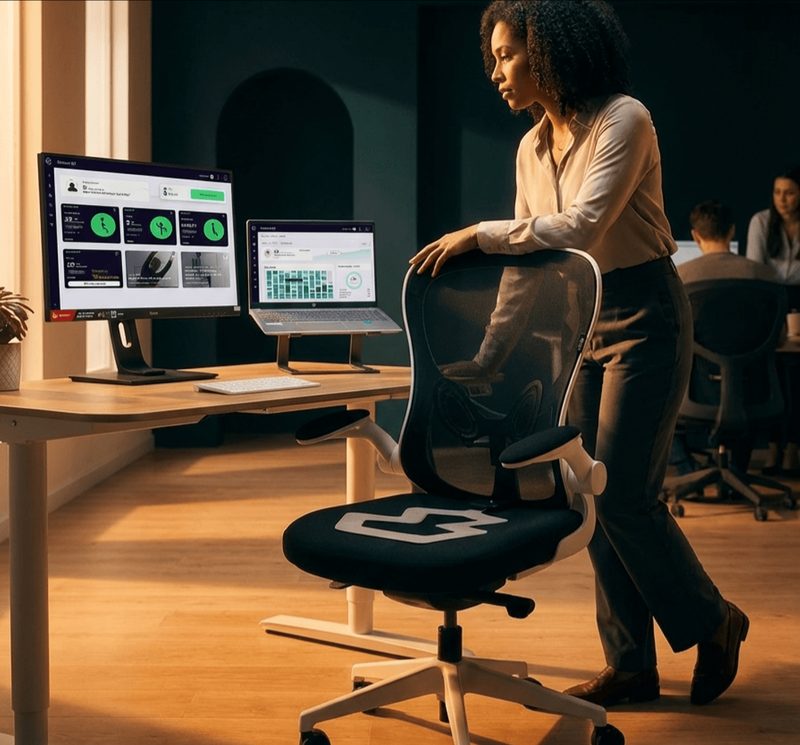
People don't leave work because they lack motivation. They leave because work has become physically or mentally unsustainable.
Back pain, surgery, long COVID, fatigue and other long-term conditions can all reduce how long someone can sit and work. Stamina and confidence drop with it.
Without objective support for pacing, people commonly overdo it on a good day, relapse, and end up off work again. 148.8 million working days were lost to sickness or injury in the UK in 2025.
The missing data layer
| Questionnaires | Subjective and infrequent |
|---|---|
| Physiotherapy | Appointment-based |
| Occupational health | A limited continuous view |
| Wearables | Need motivation and daily compliance |
| DSE assessments | Static snapshots of a workstation |
| Fyt | Continuous, passive, and about desk work itself |
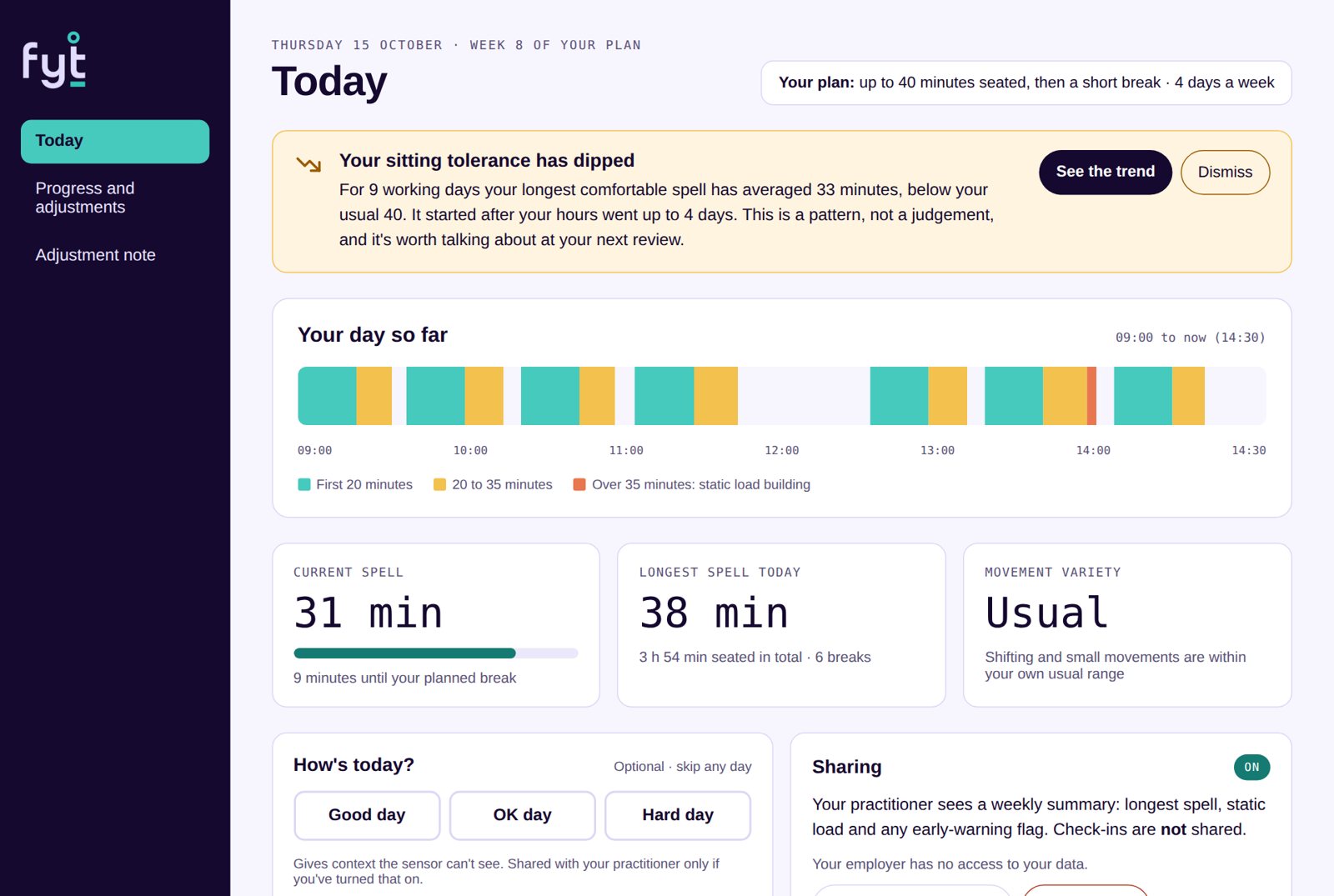
How long you can sustain desk work, tracked day by day and week by week.
Unbroken periods without movement, which build strain during recovery.
Micro-movements and position changes while you sit.
When your tolerance starts falling below your usual, so you and your supporter can act before a setback or absence.
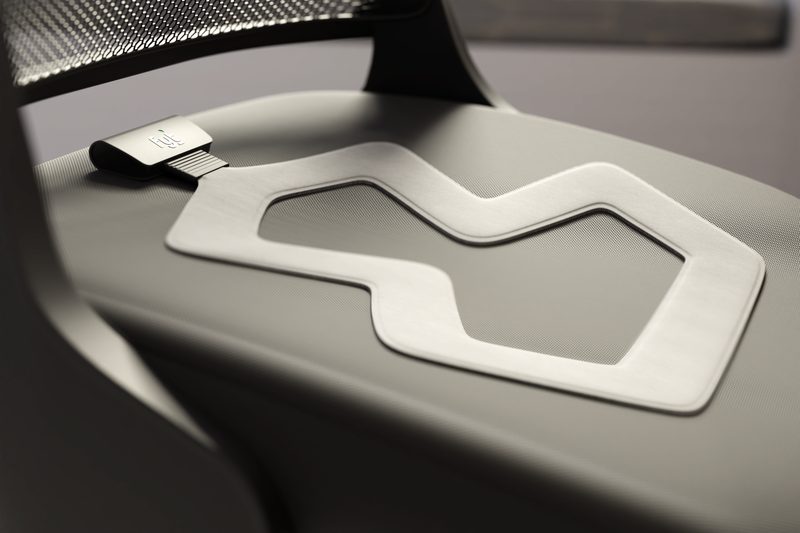
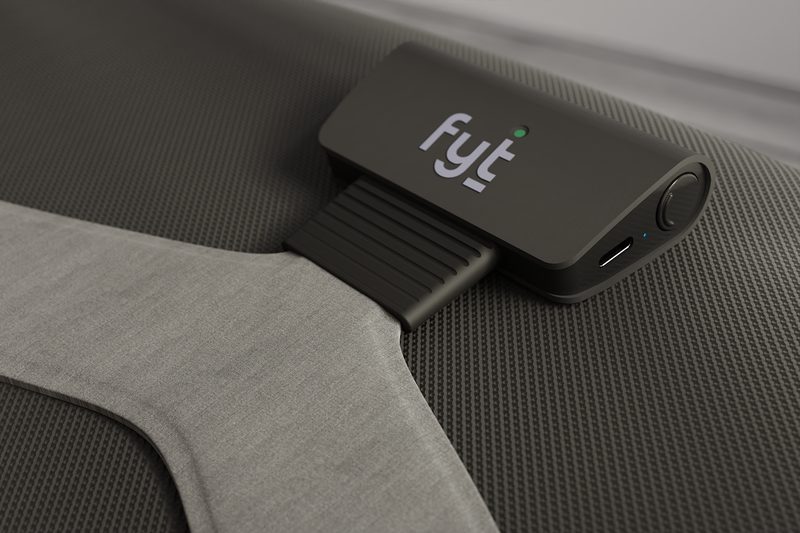
The slim mat fits your existing office chair. Pressure and motion sensors pick up weight shift and movement. There's nothing to wear, no calibration and no exercise programme.
When static load rises, a supportive prompt suggests a change of position or a short break. Prompts are easy to dismiss, and you choose the style.
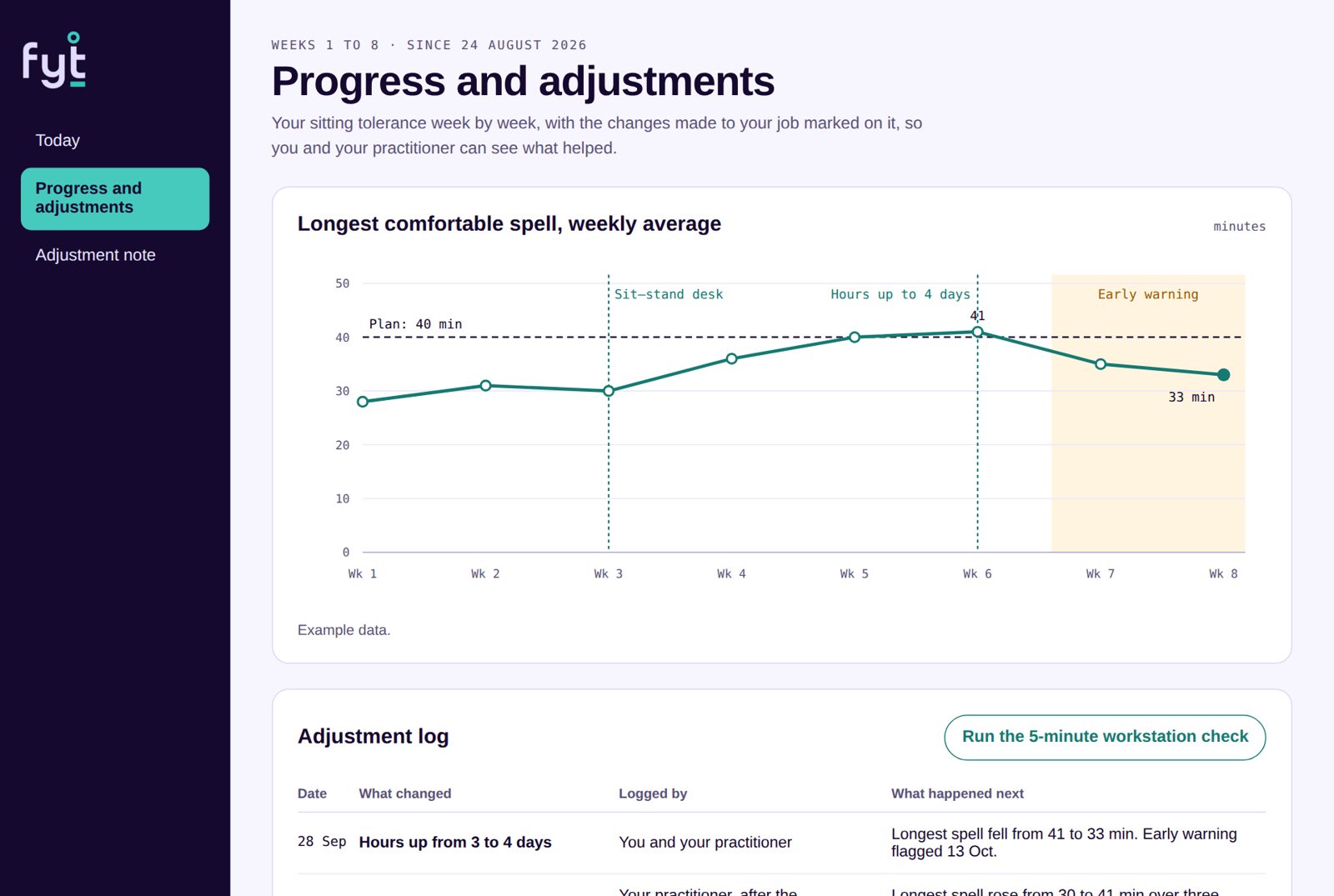
With your consent, your practitioner sees high-level trends. Together you plan hours, breaks and workstation changes, log them, and see whether they worked.
The dashboard
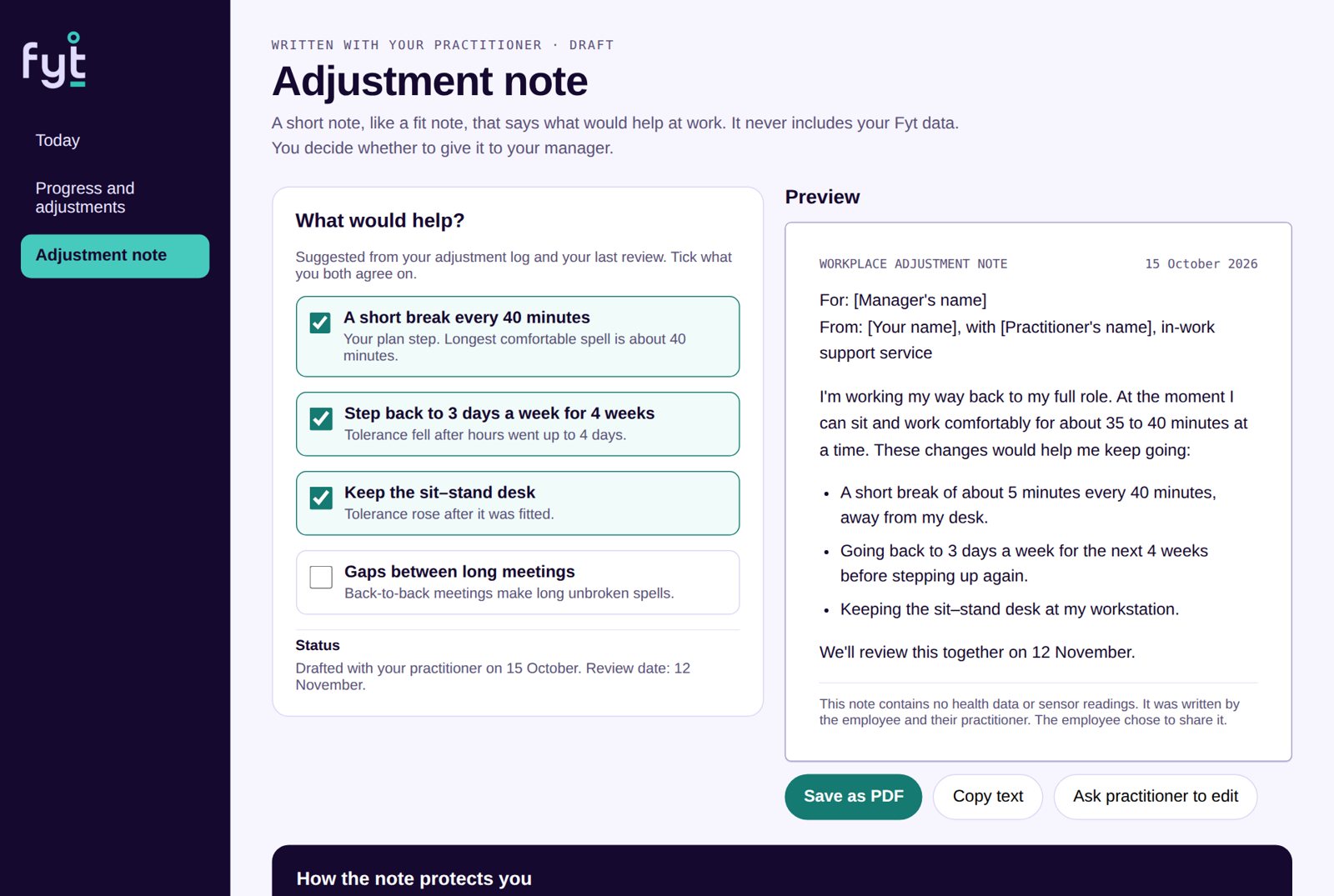
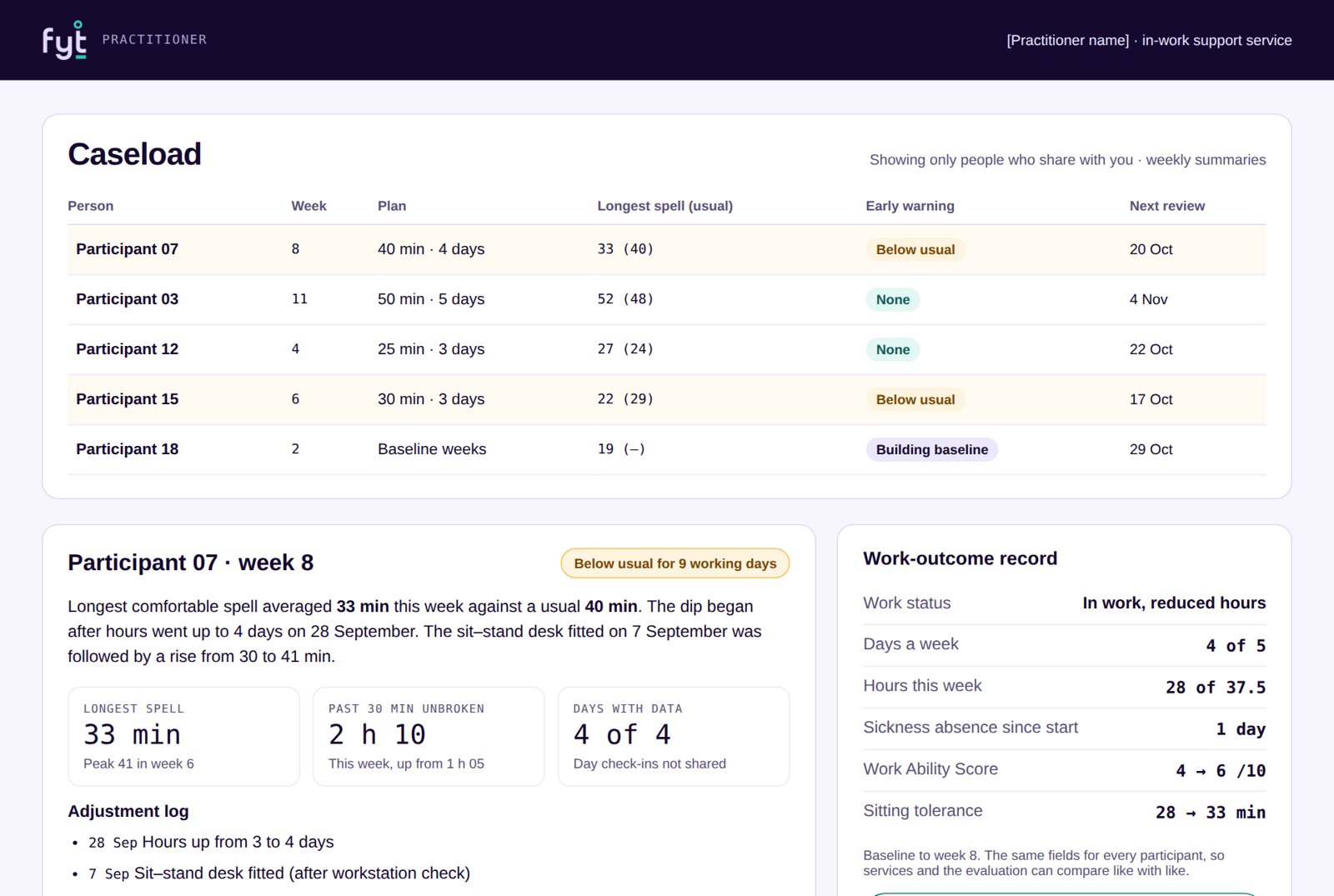
Prototype screens with example data.
The goal is sustainable return to work and job retention, not engagement scores or posture perfection.
No manual calibration, required exercises or high-motivation app. It works in the background.
Continuous insight gives a clearer picture than self-report alone.
Designed for different bodies, conditions and confidence levels. Private by default, with no "good" or "bad" posture.
Fyt supports pacing. It doesn't replace physiotherapy, occupational therapy, medical care or structured rehabilitation.
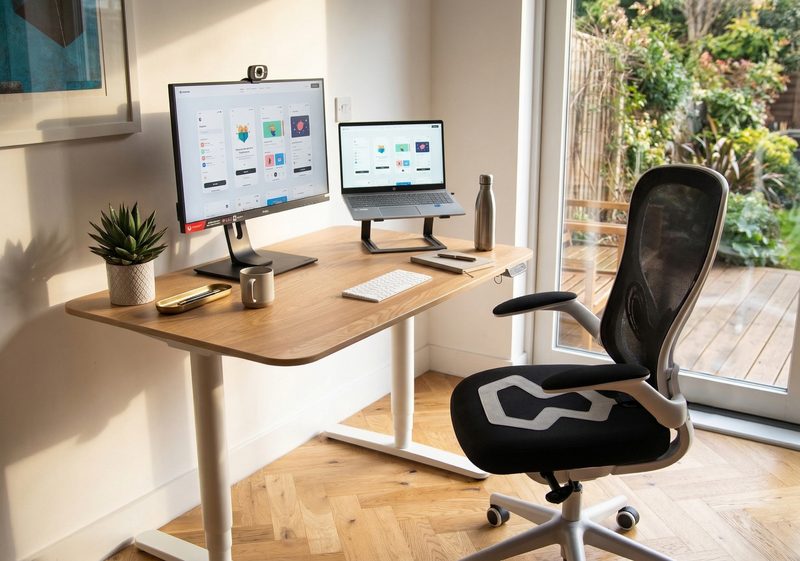
Gentle, private support that helps you rebuild sitting tolerance at a sustainable pace, so you can get back to work without overdoing it.
Objective, continuous data on sitting tolerance and pacing to support a safer graded return to desk work, without adding appointment burden.
Help people who've been off with MSK or related conditions return and stay in work. Evidence to adjust the job, not just the person: breaks, workstation and how the day is structured.
Support better return-to-work outcomes and reduce repeat absence, with low-friction tools and visible pacing insight during recovery.
Treat work as a health outcome, with trends that inform conversations between appointments.
A practical, inclusive tool that supports work capacity and sustained employment for people with health conditions affecting desk work.
Privacy
Fear of being monitored stops people saying they're struggling. So Fyt is built around the individual.
Sensor signals are processed on your own computer, and only compact summaries are uploaded. Shared views exist only while your consent is active, are limited to agreed trend summaries, and can be revoked at any time.
If you want to ask for an adjustment, you and your practitioner can choose to write a short note for your manager together. It says what would help, never your data, and only you decide whether to hand it over.
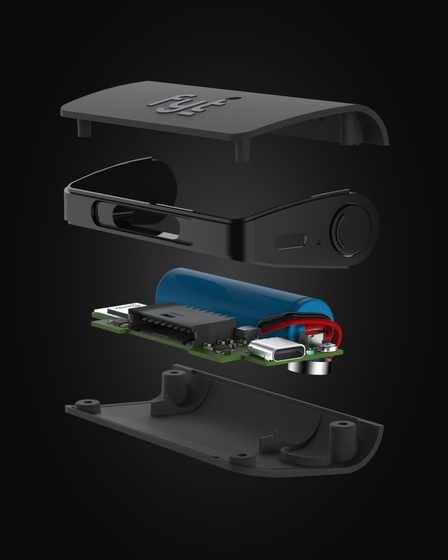
Ten years of development, backed by Innovate UK and university partners: production sensor hardware, firmware, a Bluetooth desktop companion, cloud platform and manufacturing IP.
Where we are now
We're planning an independently evaluated pilot for 2027 with an NHS in-work support service and university partners, subject to funding. It will test whether pacing data helps people sustain their working hours, and publish what does and doesn't work.
Support return to work and sustained employment.
Support every desk worker who needs better pacing.
Every office chair can help people stay well in work.
Partner with us
We're looking for occupational health providers, vocational and in-work support services, insurers and employers who want to pilot Fyt, and for partners who want to help build it.
info@sitfyt.com